Sponsored content and native advertising are forms of paid media strategies that fit the form and function of the surrounding editorial content on a webpage. It looks “native” to the page.
However, the main difference is that native advertising is more like a traditional ad and sponsored content is more like a media placement.
In this article:
- Native advertising promotes clickable headlines and thumbnails that lead to branded content on your site.
- Sponsored content is longer-form, value-driven, branded journalism published directly on a publisher’s website.
- Native ads function like ads; sponsored content functions like editorial.
- Each serves different goals depending on whether you want traffic, engagement or trusted storytelling.
Each type serves a different purpose depending on what your brand hopes to achieve. It’s important to know what these strategies are, when to use each one and what they look like.
Learn more about branded content
Native advertising
What is native advertising?
A native ad lives on a webpage and links to either sponsored, owned or earned media — really, anything the brand wants people to read.
Once you click on the ad, it will likely send you to a lightly branded article. You’ll usually see a couple brand mentions as well as a CTA. The most effective types of native ads are those that provide real, actionable value for the reader.
What does native advertising look like?
The Interactive Advertising Bureau (IAB) defines six core native ad formats:
- In-feed ads (found within publisher editorial feeds and on social platforms)
- Paid search ads (sponsored listings at the top of search results)
- Recommendation widgets (Outbrain, Taboola, StackAdapt)
- Promoted listings (Amazon, Etsy, and other marketplace product listings)
- In-ad with native elements (Sharethrough, TripleLift, Nativo, Teads)
- Custom / “can’t be contained” units (TikTok branded effects, Instagram branded content formats, Snapchat lenses, Flipboard)
In all of these cases, the ad mirrors the surrounding content in look, feel and function. For example, when you’re browsing products on Amazon, promoted listings appear alongside organic results but are labeled as advertisements.
In-feed units and recommendation widgets typically use a headline, short description and single image to match the user experience of the page. Ideally, your native ads should match the user’s experience by including the same fonts, colors and functions.
Curious how branded content compares to other advertising formats? Check out our guide to branded content vs. product placement.
Branded content vs product placement
What are the benefits of native advertising?
Native ads continue to be one of the most effective paid media formats because they blend seamlessly into a user’s experience. The global native-advertising market was estimated at $105.9B in 2024 and is projected to grow substantially through 2033 (Grand View Research).
Here are the key benefits in today’s environment:
- The ability to measure views, clicks and post-click engagement on a native ad
- Campaign analysis and A/B testing to choose the best performer
- A potentially long shelf life
- Organic traffic from social media shares even once the native ad campaign is complete
- Clear, consistent engagement signals that recommendation systems and AI models use to determine content relevance
Native advertising ad placement examples:
Promoted listing: Etsy features artisan and handmade products sold by individuals. You can search a large variety of products. Here, we searched for wedding centerpieces:
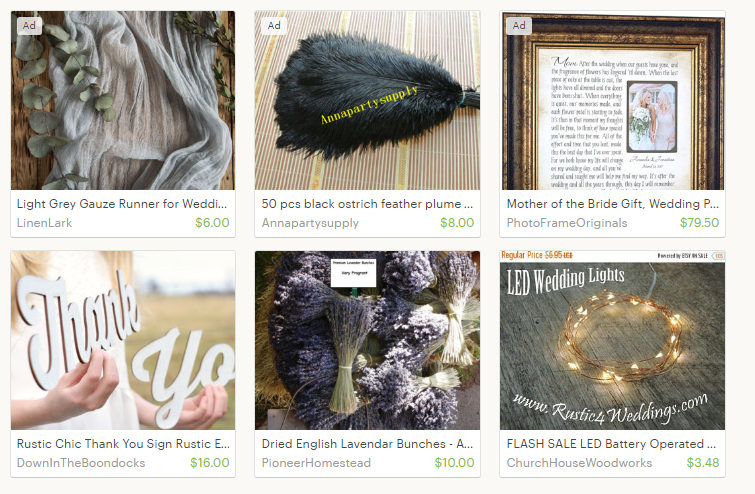
You’ll see that the first row includes products that display an “ad” icon in the upper left corner. This type of native advertising boosts views of a brand’s products by bringing them to the top of the page. Shoppers are more likely to see these listings than if they appeared later in the results.
Paid search units (most commonly, Google Adwords): When searching for a new product on a search platform, a paid search unit will appear at the top of the search platform, similar to the promoted listing.
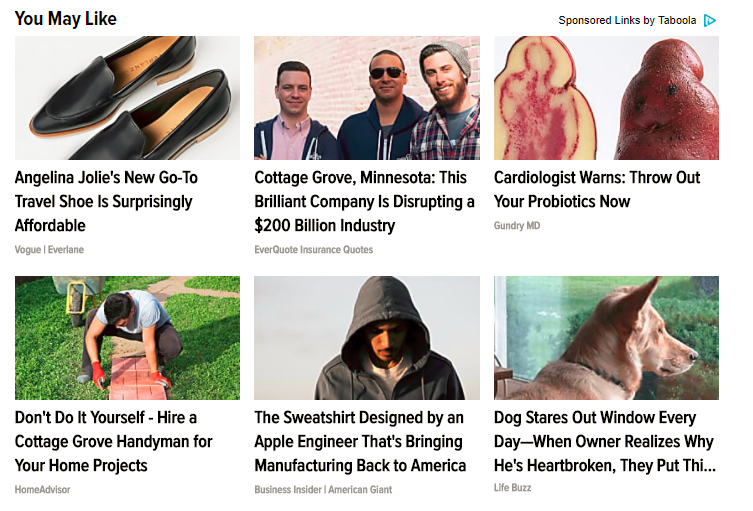
Recommendation widgets: Using tools like Outbrain or Taboola, you can create an ad that links to a post you’d like to promote. The ad will appear at the bottom or on the side of of an article on a website that may look like the following:
Sponsored content
What is sponsored content?
Sponsored content is a type of native advertising because it matches the look, feel and tone of its host publisher — but it is not an ad. Instead, it is longer-form brand-sponsored content that lives directly on a publisher’s website.
Key characteristics:
- Long-form content such as articles, videos, infographics or listicles
- Lives on a media publisher’s site, not your own
- Tells a deeper story, offering engaging, editorial-style content
- Provides value by informing, educating or entertaining readers
- Not an ad unit — it doesn’t rely on headlines or thumbnails to drive traffic
- Brand-directed messaging — marketers can help shape or fully create the content
- Publisher-created options — some publishers have teams dedicated to producing sponsored content for brand partners
Typically, sponsored content is less restrictive than native advertising and publishers give brands leeway to be creative and engaging — as long as the post is clearly marked as “sponsored” or “promoted.” This also means that brands can mention a product or service and include a call to action.
Sponsored content vs branded content
What does sponsored content look like?
Sponsored content appears in many formats — as long as it blends naturally into the editorial environment of a publisher’s website. Common forms include:
- Articles and listicles written in the publisher’s editorial style
- Videos and short-form storytelling embedded within a publisher’s content feed
- Infographics, explainers or interactive pieces that match the publication’s visual identity
- Longer-form features that mirror the tone and voice of the publication
What are the benefits of sponsored content?
- Establishes expertise and authority
- Builds trust through value-driven storytelling
- Drives short-term engagement and conversions
- Supports long-term brand awareness and nurturing
- Enhances visibility in AI-driven environments
Examples of sponsored content:
The Renewal Project: Partnership between Allstate and The Atlantic
Allstate insurance created a collection of stories on a separate website (therenewalproject.com) to “highlight, support, and celebrate ordinary people creating extraordinary community renewal.” The website is just one in a series of other “renewal” campaigns, created by Atlantic Media Strategies, the studio for The Atlantic.
Cocaine Economics: Partnership between Netflix and The Wall Street Journal
To promote new television show “Narcos,” Netflix partnered with the advertising department of The Wall Street Journal to create a standalone piece digging deep in the show’s central issue — violence among cocaine traffickers. The content is highly engaging due to illustrations, interactive animations, pull quotes and video clips of the show.
Can You Guess Which Animal Fact We Made Up?: Partnership between Wendy’s and BuzzFeed
Wendy’s is a brand publisher on BuzzFeed. But their content usually doesn’t have much to do with their food. Rather, they post entertaining content to attract readers. In this case, Wendy’s takes an interactive approach with a quiz to test readers’ animal knowledge. To make a connection to their brand, Wendy’s states at the bottom of the page: “Some of these facts seem impossible to believe. Just like Wendy’s adding the Double Stack™ as an option in the 4 for $4** for a limited time.”
Explore sponsored content examples
Compare and Contrast
In today’s marketing landscape, paid media is a necessary strategy to reach your target audience and achieve inbound marketing goals.
Native advertising and sponsored content both play essential roles in today’s paid media landscape, but they serve different purposes:
- Native ads are built to drive traffic and quick engagement
- Sponsored content supports deeper storytelling, trust-building and long-term brand authority.
In 2026, both formats support your brand’s discoverability across search engines, social feeds and AI-driven systems that surface content based on relevance and credibility. The key is choosing the right mix to meet your visibility, engagement and brand-building goals.
If you’re ready to expand your reach and strengthen your content strategy, native advertising and sponsored content can work together to amplify your message and connect with audiences in powerful ways.
Ready to bring these tactics into your 2026 content strategy?
Editor’s Note: This post was originally published in May, 2017 and has been updated for relevancy and comprehensiveness.